
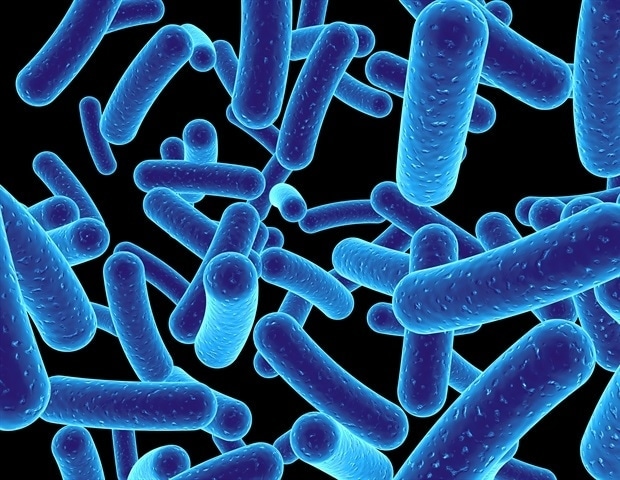
Pseudomonas aeruginosa (Pa) are proof against most antibiotics and trigger life-threatening infections of wounds or the lungs. The Pa micro organism species has a whole arsenal of methods for evading the immune system and infecting tissue. Researchers working with Prof. Dr. Winfried Roemer and Dr. Carsten Schwan of the College of Freiburg and the Excellence Cluster CIBSS – Heart for Integrative Organic Signaling Research – have recognized a beforehand unknown, pure, protection mechanism that protects cells from Pseudomonas an infection. The examine has been printed in Cell Experiences.
Pseudomonas aeruginosa additionally enter cells in a focused means
Surrounded by vitamins and undetected by the immune system, the inside of a cell is the perfect place for pathogenic micro organism to breed. Nonetheless, it was a protracted thought that they existed outdoors of cells for probably the most half. “Within the meantime, it is clear that the image is extra complicated and the micro organism goal the cells they penetrate,” Römer explains. With assistance from stay cell imaging microscopy, this may be noticed within the laboratory. The micro organism take up shut contact with the cell and make indentations in its membrane till they’re fully engulfed by it.
Pseudomonas triggers the denting of the cell’s membrane by binding the virulence issue LecA to sugar molecules on the membrane’s floor. Proteins that bind with sugars are frequent within the pure world and are additionally noticed on different micro organism and viruses. The robust binding of the micro organism and host cells results in the cell membrane closing itself like a zipper across the micro organism – a course of that Römer’s working group has been analyzing for fairly a while.
“Now we have deliberately centered on the function septins play in Pseudomonas an infection,” says Schwan, describing the target of the present examine. “It is identified of different micro organism that they manipulate host cell septins and may exploit them to ease penetration. But on the similar time, septins may also encapsulate micro organism which have already penetrated and induce their liquidation, so that they have an ambivalent perform in infections,” Schwan continues. Septins are a part of the cytoskeleton and function a key structural component much like a modular scaffold that may be flexibly put collectively and brought aside. In addition they ceaselessly play a task exactly when curved membranes are concerned.
The binding of LecA is ample to induce septin accumulation
Of their newest examine, the researchers used human lung cells that they contaminated with Pseudomonas aeruginosa within the lab. They discovered the attachment of the micro organism led to septins gathering on the web site inside a number of seconds or minutes. If the micro organism did not penetrate, the buildup then dissolved once more rapidly. The researchers might additionally observe this impact when as an alternative of micro organism small polymer beads coated with LecA got to the cells. This confirmed that binding through LecA was sufficient to induce septin accumulation.
We anticipated that Pseudomonas needed this accumulation of septins, and that it helped them throughout an infection, simply as with different varieties of micro organism.”
dr Carsten Schwan, College of Freiburg and the Excellence Cluster CIBSS – Heart for Integrative Organic Signaling Research
As a substitute, they discovered that twice as many micro organism might penetrate when the researchers knocked down a few of the septins. “We had been stunned by the outcomes at first, however now we’re pondering it isn’t simply an remoted case. It might be that septins additionally play a protecting function with many different pathogens,” he concludes.
A foundation for creating medicine to deal with antibiotic-resistant micro organism
The researchers had been in a position to measure the energy of the septin barrier in additional experiments. To do that, they connected the minimal bacterial mannequin to the cantilever of an atomic pressure microscope (AFM), which permits the tiniest of indentations and resistances on surfaces to be measured as pressure. The researchers found that the cell membrane was clearly extra inflexible domestically when the polymer beads had been coated with LecA and septin accrued.
“That is an infinite impact when you think about that throughout the an infection course of, many various molecules are concerned. For an intervention to have such nice affect, you typically must inhibit a number of elements, as a result of in any other case, compensations are made,” says Römer.
He continues, “That speaks strongly for septins actually enjoying a major function in averting infections right here.” The researchers now intend to additional their investigations of lectins and septins. Higher understanding of those proteins might assist to find factors of assault for medicine designed to stop an infection by antibiotic-resistant micro organism.
In regards to the Cluster of Excellence CIBSS
The Cluster of Excellence CIBSS – Heart for Integrative Organic Signaling Research has the objective of gaining a complete understanding of organic signaling processes throughout scales – from interactions between particular person molecules and cells to processes in organs and whole organisms. Researchers use the data thus gained to develop methods for controlling indicators in a focused method. These applied sciences allow them not solely to achieve insights in analysis but additionally to develop improvements in drugs and plant sciences.
sources:
Journal reference:
Aigal, S., et al. (2022) Septin limitations defend mammalian host cells towards Pseudomonas aeruginosa invasion. Cell Experiences. doi.org/10.1016/j.celrep.2022.111510.
